The cost of the energy crisis exceeds 2 billion dollars per day
The de facto closure of the Strait of Hormuz due to the escalating conflicts in the Middle East caused huge economic losses in the Gulf countries.
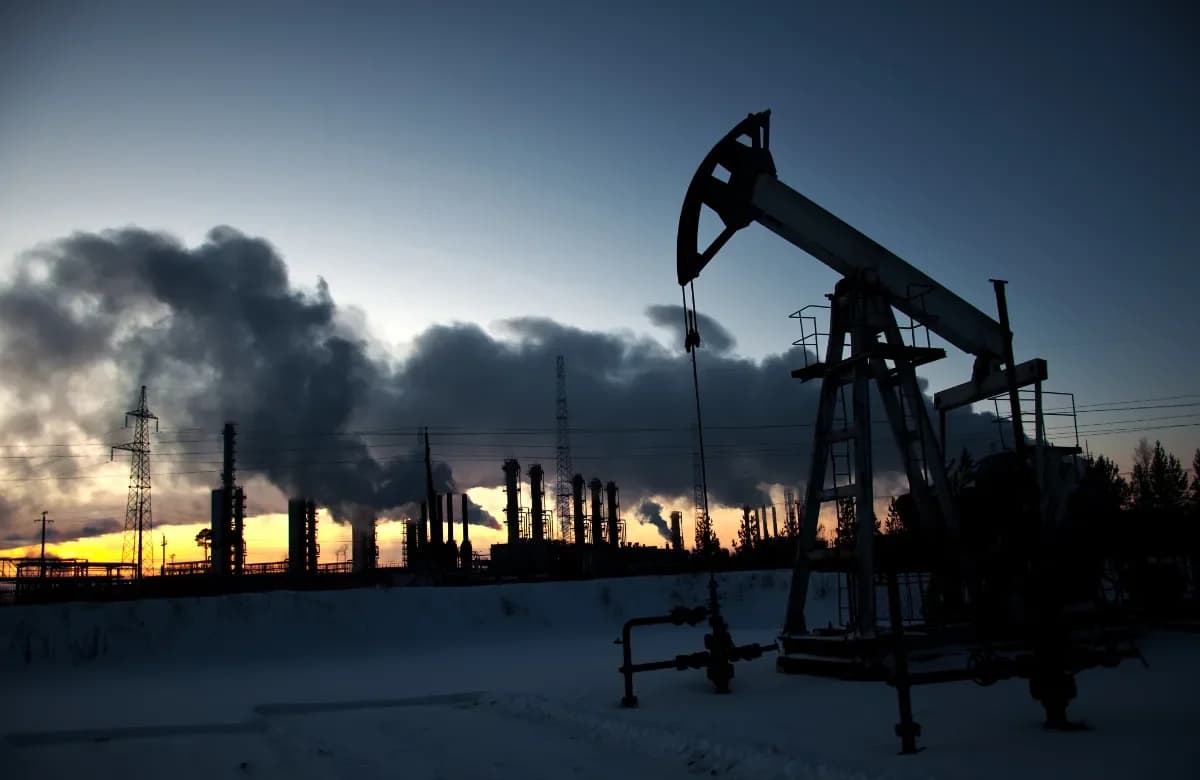
The US and Israel's attack on Iran and Iran's retaliation have led to a serious economic slowdown in many sectors in the Gulf countries, especially energy production, trade routes, logistics, finance and tourism. The daily balance sheet of the first 3 weeks of the war clearly revealed the destruction in the regional economies.
While the Gulf region represents approximately one-third of the world supply with a daily oil production of approximately 30 million barrels, it is also home to the Strait of Hormuz, through which approximately 20 percent of global oil trade passes.
Natural gas shipments of Qatar and the United Arab Emirates, which realize approximately 20 percent of global LNG exports. Most of the oil exports of countries such as Saudi Arabia, Kuwait and Iraq are opened to world markets through this route.
In the third week of the US-Israel and Iran War, the oil exports of the Gulf countries decreased by more than 60 percent, from 25.1 million barrels per day to 9.7 million barrels.
According to International Energy Agency (IEA) data, 25 percent of oil shipments by sea pass through the Strait of Hormuz. Major Asian economies such as China, Japan, South Korea and India import significant amounts of oil from the Gulf region. 44 percent of the crude oil departing from here is exported to China and India.
The largest oil supply disruption in modern history is taking place
This disruption of approximately 15 million barrels is considered one of the largest oil supply disruptions in modern history. While the loss of oil revenues of the Gulf countries in the last two weeks, excluding LNG and petrochemical revenues, is calculated as 25 billion dollars, it is feared that this amount will increase even more with the inclusion of LNG and other products.
The fact that the trade of crude oil and petroleum products through this strategic passage has come to a halt, deepening supply concerns in the oil markets and leading to sharp increases in prices.
After oil prices exceeded 100 dollars per barrel in a short time in this process, IEA member countries have a total of 400 dollars. reached an agreement to release a million barrels of emergency oil stock to the market. The step in question prevented the uncontrolled rise in oil prices and enabled refineries to find short-term crude oil.
Analysts state that it is difficult for this alone to cause a large decrease in oil prices, and it is predicted that the price increase may slow down and the panic fluctuation in the market may be limited for a while.
Saudi Arabia's daily loss approached 1 billion dollars
Turkish Energy Strategies and Policies Research Center (TESPAM) President Oğuzhan In his evaluation to the AA correspondent, Akyener said that the total loss of Saudi Arabia, the United Arab Emirates, Qatar, Kuwait, Oman, Bahrain and Iraq due to the energy crisis is estimated to be approximately 2.3 billion dollars per day.
Akyener stated that when the annual oil and natural gas revenues of the countries are considered, Saudi Arabia ranks first with 230 billion dollars and said, "This country is followed by the UAE with 140 billion dollars, Qatar with 120 billion dollars, Oil revenues constitute 60 percent of the state income of Saudi Arabia, which is the world's largest oil exporter and the leader of the Organization of Petroleum Exporting Countries (OPEC).With the developments in the last two weeks, Saudi Arabia's daily loss is estimated to be close to 1 billion dollars." He gave the information.
Stating that the UAE has a daily oil production of 3 million barrels, Akyener stated that approximately 60 percent of the country's income comes from oil and natural gas revenues. 80 percent of the revenues of Qatar, which is the largest LNG producer and exporter, comes from natural gas exports. Natural gas is the main source of the country's economy. Recent events are reflected in Qatar's economy as a daily loss of 300 million dollars. LNG exports of Qatar, which has to use Hormuz for the shipment of LNG tankers, have almost completely stopped. Kuwait, one of the Gulf countries, has a daily oil production capacity of 2.8 million barrels. Oil revenues constitute approximately 85 percent of the country's economy. It is stated that Kuwait's loss is approaching 200 million dollars per day."
Akyener stated that Oman's daily oil production is at the level of 1 million barrels and 70 percent of the country's income is provided by natural gas and oil production.
Stating that oil revenues constitute 75 percent of the income of Bahrain, the smallest country of the Gulf, Akyener said that Bahrain's economic loss in this process is 40 percent per day. Emphasizing that Iraq was one of the countries most affected by the war, Akyener said: "While more than 94 percent of Iraq's oil exports passed through this strait, the country's oil exports suffered a great blow as a result of Iran targeting tankers carrying Iraqi oil and the virtual halt of ship passage through the Strait of Hormuz. Iraq's oil production decreased from 4.2 million barrels per day to approximately 1.2 million barrels during the said period. The economic loss of Iraq, which is not among the Gulf Arab Countries Cooperation Council countries but is geographically a Persian Gulf country, from this crisis is calculated as 300 million dollars per day. Kuwait and Bahrain are almost 100 percent dependent on the Strait of Hormuz, while Iraq, Saudi Arabia, the UAE and Iran can carry out some of their exports through pipelines without using the strait.
Saudi Arabia, which is trying to compensate for its losses in the Strait of Hormuz with pipelines, has an East-West Crude Oil Pipeline with a daily carrying capacity of 5 million barrels extending from the east to the west of the country, and the United Arab Emirates runs from the country's capital, Abu Dhabi, to the coast of the Arabian Sea. It is heading towards the Abu Dhabi Crude Oil Pipeline, which extends to Fujairah and carries 1.5 million barrels of oil per day, while Iraq can open to the world through the Kirkuk-Ceyhan Oil Pipeline.
Source: Anadolu Agency
Sigortada Bugün'un gündem editörü. Sigorta sektörünü doğrudan etkileyen güncel gelişmeleri, piyasa haberlerini ve sektör dinamiklerini takip ederek okuyucularına aktarıyor.
All articles →Comments (0)
Sign in to comment
No comments yet. Be the first to comment!
Related Articles

Artificial intelligence creates a multiplier effect in cyber attacks

Toyota C-HR Left Behind 10 Years of Making a Difference in the Automotive World

Summer Months, the Quiet Period of Resignations

The 38th International Insurers Tennis Tournament Organized by Milli Re Begins

Middle East crisis will boost electric vehicle momentum